

But we also know that circumstances change. Not everyone is able to take part in house-to-house collections, and not every community works in the same way.
At its heart, house-to-house fundraising is about being visible in your community, inviting conversation, and taking part together – not just knocking on doors.
If door-to-door collections aren’t right for you or your community this year, there are other ways to fundraise that carry the same spirit and sense of shared action.
Image credits and information
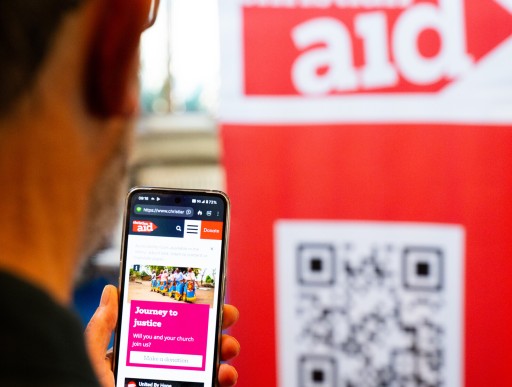
A visible invitation to give
Put up posters with a clear call to donate during Christian Aid Week.
This works in places where a conversation isn’t possible, but the invitation to give is still clear.
Share an online envelope
An online envelope works in the same way as a physical one — it invites a single, straightforward donation.
Share it by:
- text message
- social media
- QR codes on the printable poster
People can give when it suits them, without needing a visit.
Image credits and information
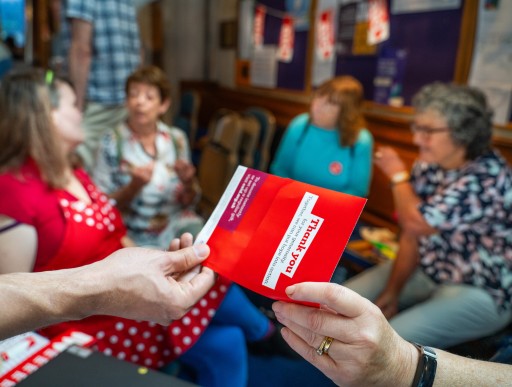
An envelope collection beyond the doorstep
Instead of delivering envelopes door to door, place them where people already gather – making it easy for people to take part in their own time.
For example:
- on seats before a service
- at a welcome desk
- alongside notices in a church hall or community space
Invite people to take an envelope, give during the week, and return it to a shared collection point.